

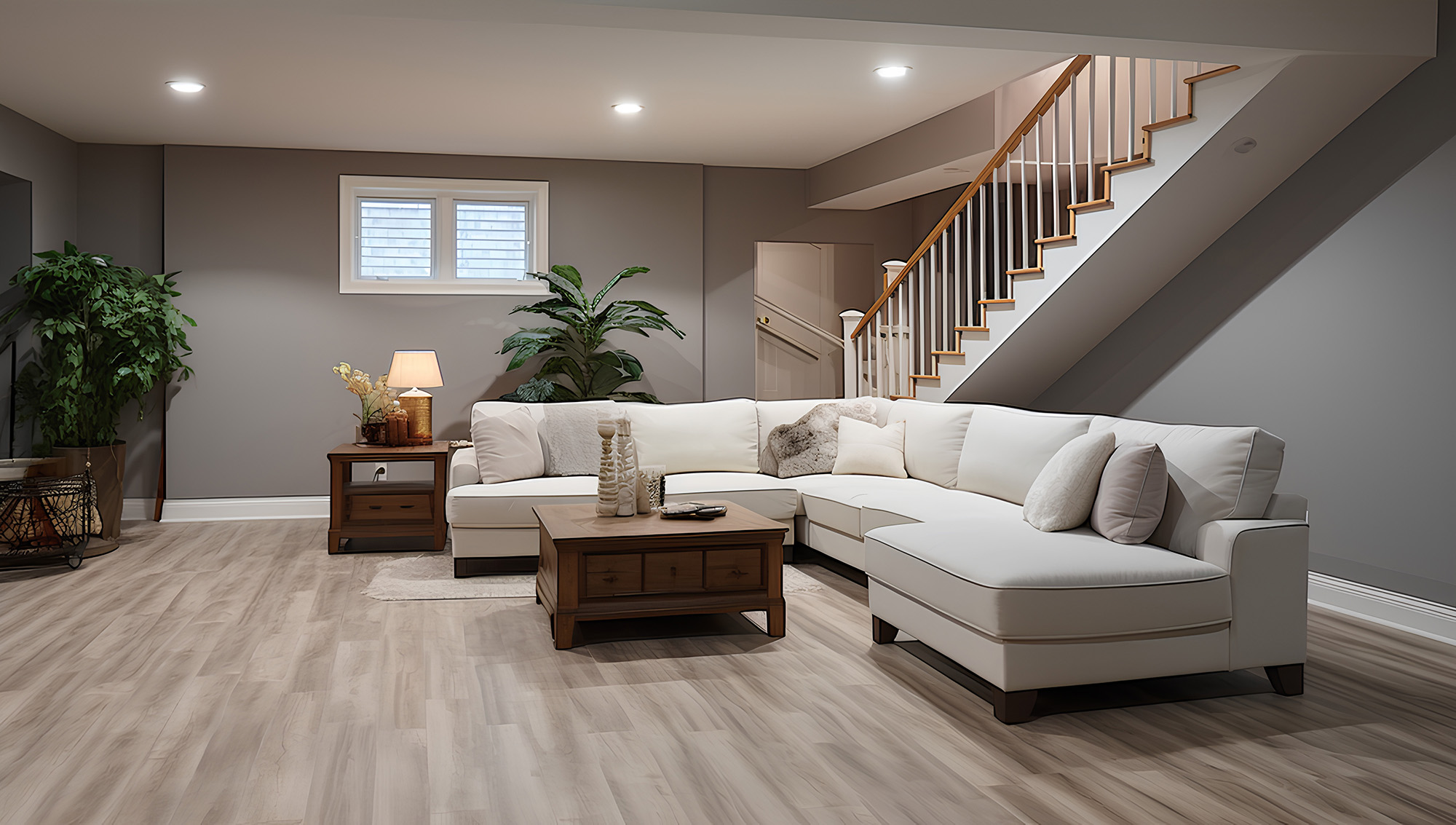
A finished basement can become one of the most useful spaces in a home. It might serve as a family entertainment room, a home gym, a guest suite, a playroom, or a quiet retreat away from the busiest areas of the house. Before choosing paint colors, furniture, and lighting, however, homeowners need to consider an important part of the renovation: the floor beneath everything else.
Basements present different flooring challenges than rooms located above ground. Concrete subfloors, seasonal humidity, occasional moisture concerns, and changes in temperature can all influence which material performs best. For homeowners in Woodbridge and Stafford, Virginia, luxury vinyl flooring is worth considering because it combines a wide range of designs with practical features suited to many everyday spaces.
Why Basement Flooring Requires a Different Approach
A basement may look dry and comfortable during a walkthrough, but its conditions can differ from those of the main living areas. Concrete can transmit moisture vapor, and below-grade rooms may feel cooler or more humid depending on the season, drainage, and ventilation. These conditions make it important to evaluate the space before selecting a finished floor.
Carpet, hardwood, laminate, tile, and luxury vinyl each have different installation requirements and performance characteristics. The right choice depends on the basement's intended use, the condition of the subfloor, and the manufacturer's specifications for the product being considered.
Luxury vinyl is often appealing because many products are designed to resist water at the flooring surface. That can provide added reassurance in a room where drinks might spill, children may play, or everyday activity creates occasional messes. Still, water-resistant or waterproof flooring does not solve every moisture problem. It cannot correct a leaking foundation, persistent dampness, or water entering from outside.
Understand What Luxury Vinyl Can and Cannot Do
Luxury vinyl flooring is available in designs that reproduce the appearance of natural wood, stone, and other materials. Depending on the product, it may be offered as planks or tiles, with different construction methods, thicknesses, surface textures, and installation systems.
For a finished basement, one of its main attractions is the ability to create a polished appearance without using natural hardwood in a below-grade environment. Wood-look vinyl can complement built-in shelving, neutral walls, modern furniture, or traditional décor. Stone-look designs can also suit recreation rooms, home bars, and contemporary entertainment areas.
However, no flooring material should be selected on appearance alone. Product specifications matter. Homeowners should confirm whether the particular flooring is approved for below-grade installation, what subfloor conditions are required, whether a moisture test is necessary, and which installation method the manufacturer permits.
Explore the available styles in First American Carpet & Floors' luxury vinyl flooring collection when comparing designs for a basement renovation.
Choose a Design That Fits the Purpose of the Basement
Not every basement serves the same purpose, so the floor should support the activities planned for the room. A family room used for movie nights has different priorities from a workout area or a guest bedroom. Think about how the space will function before narrowing down colors and patterns.
For a family entertainment room
A warm, natural-looking plank can make a basement feel more connected to the rest of the home. Medium wood tones often provide flexibility when pairing flooring with sofas, entertainment consoles, rugs, and accent furniture. A quieter grain pattern can also help a large room feel coordinated when several furniture styles are present.
For a playroom or multipurpose space
Consider a design that balances visual warmth with practical cleanup. A floor that is easy to sweep and maintain may be helpful when the room is used for crafts, games, snacks, and other everyday activities. Area rugs can define play zones and add softness, provided they are appropriate for the flooring and do not create slipping hazards.
For a home gym
Think beyond the decorative surface. Exercise equipment can create concentrated loads, and dropped weights may damage flooring that is not designed for that type of impact. Check the flooring manufacturer's requirements and use suitable protective mats where needed. For heavy equipment or specialized training, a dedicated gym surface may be more appropriate than relying on the finished floor alone.
For a guest suite
Wood-look luxury vinyl can help create a bedroom-like atmosphere without the formality of stone or ceramic tile. Pair it with layered lighting, comfortable bedding, and soft window treatments to make the room feel intentional rather than like an unfinished basement that simply received new flooring.
Do Not Skip the Moisture and Subfloor Assessment
The condition of the concrete beneath the flooring is one of the most important considerations in a basement project. Even when the visible surface looks dry, moisture vapor may still be present. Some products require moisture testing or specific mitigation measures before installation. Follow the flooring manufacturer's requirements rather than assuming that every luxury vinyl product can be installed directly over any concrete slab.
Look for warning signs such as musty odors, water stains, peeling coatings, visible efflorescence, or a history of seepage after heavy rain. These conditions should be investigated before the flooring project begins. If water has entered the basement, identify and address the source first. Installing a new floor over an unresolved moisture issue may lead to problems beneath the finished surface.
The concrete should also meet the manufacturer's requirements for flatness, cleanliness, and soundness. Small irregularities can affect the appearance and performance of some floating floors, while adhesive-installed products may have different preparation requirements. Old adhesive, paint, cracks, and previous flooring layers should be evaluated before work proceeds.
Plan Around Basement Doors, Stairs, and Finished Walls
A successful flooring project depends on the details as much as the material. Basement renovations often include stair landings, utility closets, support posts, doorways, and transitions to existing floors. Each of these areas needs to be considered before installation.
Measure door clearances, identify the correct transition pieces, and confirm how the new floor will meet stairs and adjoining rooms. Floating floors typically require expansion space at the perimeter and around certain fixed objects, according to the manufacturer's instructions. Built-in cabinets, posts, and other permanent features should be handled in a way that respects those requirements.
Also consider how the flooring will look from the stairway. A consistent color and carefully planned plank layout can make the basement feel like a natural extension of the home. Poorly positioned seams or awkward transitions, by contrast, can distract from an otherwise attractive renovation.
Make the Room Feel Larger With a Thoughtful Layout
Basements frequently have limited natural light, so flooring color and plank layout can influence how the room feels. Lighter wood-look designs may help reflect available light, while medium tones can introduce warmth without making the space feel overly dark. Very dark flooring can create a dramatic effect, but it may show dust or light-colored debris more readily.
Long plank patterns can visually guide the eye through a narrow room. In a large open basement, the direction of installation can help connect separate activity zones. Before deciding, consider the location of windows, stairs, major sightlines, and the room's overall shape.
Sample boards are useful because a color that looks balanced in a showroom may appear different under basement lighting. View samples beside wall colors, cabinetry, and furniture finishes. Check them in daylight and under the lighting that will be used after the renovation is complete.
Consider Sound, Comfort, and Everyday Maintenance
Hard-surface flooring can reflect sound differently from carpet, especially in a large room with bare walls and limited furnishings. If the basement will be used for movies, gaming, or conversation, soft furnishings, curtains, upholstered seating, and area rugs can help create a more comfortable acoustic environment.
Luxury vinyl may feel different underfoot from carpet or natural wood. If comfort is a priority, think about where people will stand or sit for extended periods and whether rugs or other suitable accessories would improve the room. Do not add an underlayment unless it is approved for the specific flooring system; an incompatible layer can affect installation performance or warranty coverage.
For routine care, follow the product's cleaning instructions. Sweeping or vacuuming with an appropriate setting helps remove grit that can contribute to surface wear. Clean spills promptly and use cleaners recommended by the manufacturer. Avoid abrasive tools and harsh chemicals unless the product instructions specifically permit them.
Compare the Complete Project, Not Just the Price per Square Foot
When budgeting for basement flooring, consider more than the cost of the planks or tiles. Subfloor preparation, moisture testing, transitions, trim, removal of existing materials, and installation labor can all affect the final project cost. The amount of preparation needed may not become clear until the existing floor is removed and the concrete is inspected.
It is also worth comparing product warranties, installation requirements, wear-layer specifications, and suitability for the intended room. A product that appears less expensive initially may not be the best value if it does not meet the basement's conditions or design requirements.
Prepare a list of questions before selecting a floor: Is this product approved for below-grade installation? What moisture conditions are acceptable? Does the concrete need testing or special preparation? Which underlayment, if any, is permitted? How should transitions and fixed objects be handled? Clear answers help prevent avoidable surprises during the project.
Plan Your Basement Flooring With First American Carpet & Floors
A finished basement should feel like a purposeful part of the home, not an afterthought. Luxury vinyl can be a strong option when the product, subfloor, and installation method are matched to the space. Its broad range of wood- and stone-inspired designs also makes it possible to create anything from a relaxed family retreat to a more refined entertainment area.
Homeowners in Woodbridge and Stafford, VA, can explore options through First American Carpet & Floors' luxury vinyl flooring page and consider how different styles would work with their renovation plans. To discuss your project, ask questions, or arrange the next step, contact First American Carpet & Floors. With careful planning and attention to basement conditions, the right floor can help turn underused square footage into a room your household enjoys every day.


